
Understanding the Science Behind Selective Catalytic Reduction—and How Modern Systems Are Making Emissions Control Safer, Simpler, and More Efficient
Whether you’re operating a steam boiler, gas turbine, reciprocating engine, HRSG, or process heater, reducing nitrogen oxide (NOx) emissions is an increasingly important part of meeting today’s environmental regulations.
Selective Catalytic Reduction (SCR) is one of the most effective technologies available for achieving ultra-low NOx emissions. By using a catalyst and a reagent such as ammonia or urea, SCR systems can reduce NOx emissions by more than 90% while helping facilities maintain reliable, efficient operation.
This article explains how SCR reduces NOx emissions, why it’s so effective, and how modern direct urea injection technology is simplifying emissions control.
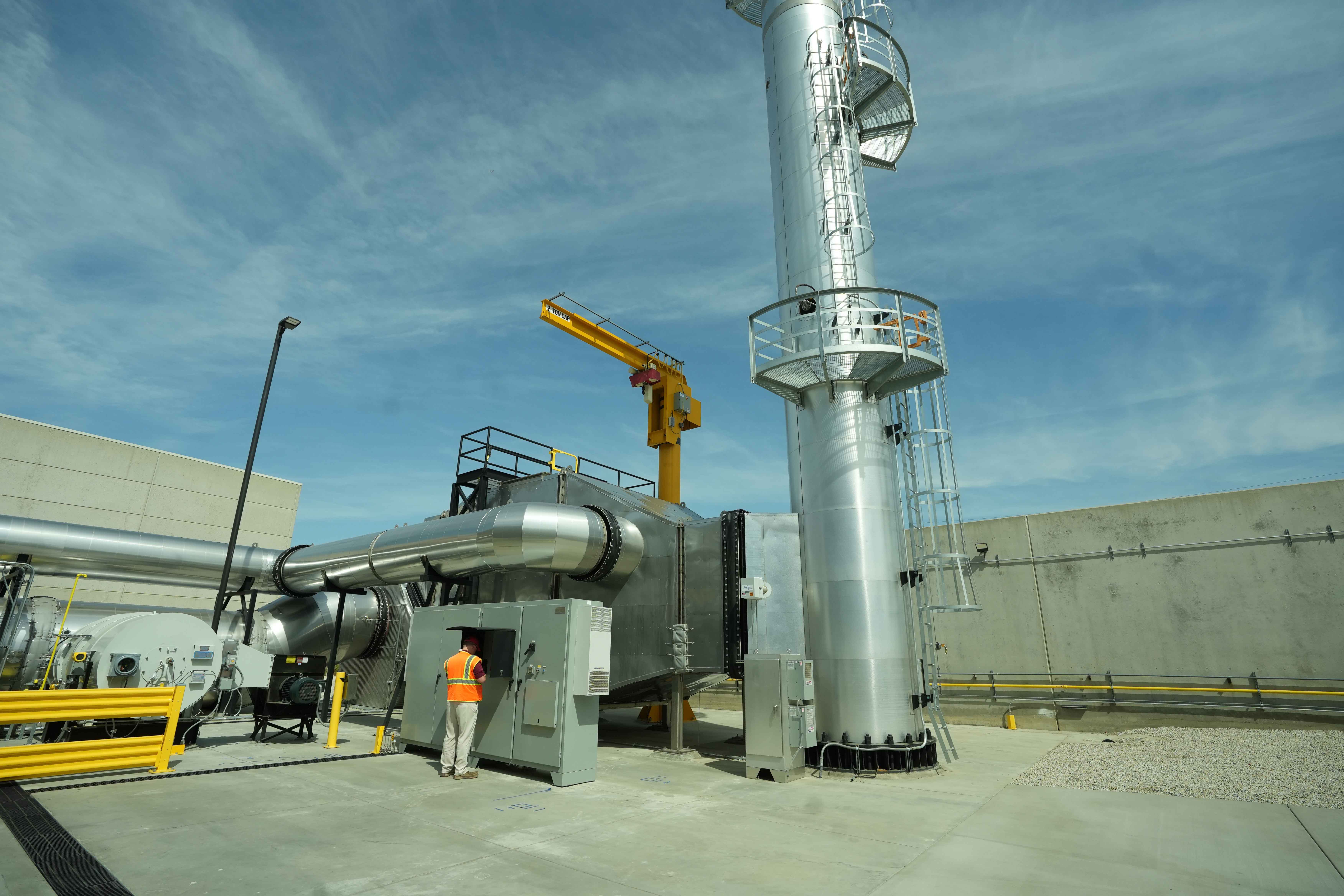
What is SCR?
Selective Catalytic Reduction (SCR) is an advanced emissions control technology that removes nitrogen oxides (NOx) from combustion exhaust before they are released into the atmosphere.
NOx is created whenever fuel is burned at high temperatures and is a major contributor to:
- Ground-level ozone
- Smog
- Acid rain
- Fine particulate matter
- Poor air quality
Because of its environmental impact, NOx emissions are regulated across many industries.
SCR systems are widely used on:
- Industrial and commercial boilers
- Gas turbines
- Heat Recovery Steam Generators (HRSGs)
- Reciprocating engines
- Process heaters
- Thermal oxidizers
- Other combustion equipment
By converting harmful NOx into harmless nitrogen and water vapor, SCR helps facilities comply with environmental regulations while supporting reliable plant operations.
How SCR Works
Although the chemistry is sophisticated, the process itself is straightforward.
Step 1: Combustion Produces NOx
During combustion, high temperatures cause nitrogen and oxygen in the air to react, forming nitrogen oxides (NOx).
These gases exit the combustion equipment with the exhaust stream.
Step 2: Reagent Injection
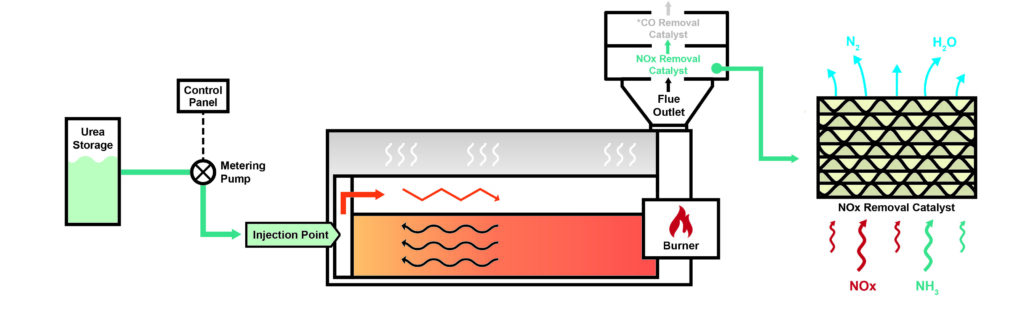
As the hot flue gas enters the SCR system, a carefully controlled amount of reagent is injected.
Depending on the system, this reagent may be:
- Anhydrous ammonia
- Aqueous ammonia
- Urea solution
The reagent mixes uniformly with the flue gas before entering the catalyst.
Step 3: Catalyst Reaction
The exhaust gas then flows through specially designed catalyst modules.
The catalyst promotes a chemical reaction between the ammonia and NOx without being consumed itself.
The primary reaction is:
4 NO + 4 NH₃ + O₂ → 4 N₂ + 6 H₂O
As a result, harmful nitrogen oxides are converted into:
- Nitrogen (N₂), which naturally makes up about 78% of Earth’s atmosphere
- Water vapor (H₂O)
Modern SCR systems routinely achieve 70–95% NOx reduction, with many applications exceeding 95% depending on system design and operating conditions.
What Does the Catalyst Do?
The catalyst is the heart of every SCR system.
Typically manufactured from materials such as titanium dioxide with active components including vanadium or tungsten, the catalyst accelerates the chemical reaction without being consumed.
Proper catalyst selection is based on factors including:
- Exhaust temperature
- Fuel type
- Dust loading
- Desired NOx reduction
- Ammonia slip limits
Matching the correct catalyst to the application helps maximize performance while extending catalyst life.
Why Operating Temperature Matters
SCR catalysts perform best within specific exhaust temperature ranges.
Selecting the proper catalyst formulation for your application’s operating temperature helps maximize NOx reduction, improve catalyst longevity, and minimize unwanted byproducts such as ammonia slip.
Because every combustion system operates differently, proper system sizing and engineering are essential for long-term performance.
Reagent Options: Urea vs. Ammonia
SCR systems rely on a reagent to drive the NOx reduction reaction.
The two most common options are ammonia and urea.
Ammonia-Based SCR
Traditional SCR systems use either anhydrous or aqueous ammonia.
Benefits include:
- Proven technology
- Excellent NOx reduction
- Widely used across many industries
Considerations include:
- Specialized storage requirements
- Additional handling precautions
- Stricter safety and regulatory requirements
Urea-Based SCR
Urea offers an alternative approach.
Rather than storing ammonia on-site, aqueous urea is stored and converted into ammonia within the SCR process.
Benefits include:
- Lower hazard classification
- Easier storage and transportation
- Simplified handling
- Reduced safety concerns
Both technologies are proven. The best choice depends on your application, operational goals, and facility requirements.
A Simpler Approach: Direct Urea Injection
Modern SCR technology continues to evolve, reducing system complexity without sacrificing emissions performance.
EcoCAT’s patented Direct Urea Injection technology introduces aqueous urea directly into the flue gas stream, where it thermally decomposes into ammonia before reaching the catalyst.
Compared to conventional urea systems, this approach can:
- Eliminate the need for bulk ammonia storage
- Reduce equipment complexity
- Simplify installation
- Minimize system footprint
- Lower maintenance requirements
- Maintain high NOx reduction performance
Rather than adding unnecessary infrastructure, direct urea injection provides a streamlined path to emissions compliance.
Why Simplicity Matters
A well-designed SCR system should not only reduce emissions—it should also be easy to own and operate.
Modern engineered systems provide benefits such as:
- Fewer system components
- Easier integration into existing equipment
- Smaller installation footprint
- Reduced maintenance complexity
- Faster installation
- Lower lifecycle costs
- Improved long-term reliability
Simpler systems often translate into lower operating costs and greater plant uptime.
What is Ammonia Slip?
Ammonia slip refers to the small amount of ammonia that passes through the SCR system without reacting.
While some ammonia slip is expected, excessive levels can create operational and environmental concerns.
Proper system engineering—including accurate catalyst sizing, reagent control, and uniform reagent distribution—helps minimize ammonia slip while maximizing NOx reduction performance.
Matching the Right SCR Solution to Your Application
No two combustion systems are exactly alike.
The most effective SCR solution depends on several factors, including:
- Equipment type (boiler, turbine, engine, HRSG, process heater)
- Fuel type
- Exhaust temperature
- Available installation space
- Desired NOx reduction
- Safety requirements
- Regulatory requirements
- Retrofit versus new installation
Some facilities benefit from traditional ammonia-based systems, while others are better served by modern urea-based technologies.
Working with an experienced SCR supplier helps ensure the system is optimized for long-term performance and compliance.
Where SCR Systems Are Used
SCR technology is used across a wide variety of industrial and commercial applications, including:
- Steam boilers
- Hot water boilers
- Heat Recovery Steam Generators (HRSGs)
- Gas turbines
- Reciprocating engines
- Thermal oxidizers
- Process heaters
- Manufacturing facilities
- Chemical processing plants
- Food and beverage production
- Pulp and paper mills
- District energy systems
- Institutional and campus central plants
Its flexibility and effectiveness have made SCR one of the world’s most widely adopted technologies for ultra-low NOx emissions control.
Benefits of SCR
Implementing the right SCR solution helps facilities achieve:
- Compliance with stringent NOx regulations
- Up to 95% or greater NOx reduction
- Ultra-low emissions performance
- Improved environmental sustainability
- Simplified system operation
- Enhanced plant safety
- Long-term operational reliability
- Lower lifecycle operating costs
Frequently Asked Questions
How much NOx can an SCR system remove?
Most SCR systems reduce NOx emissions by 70–95%, with some engineered systems achieving even higher reductions depending on the application and catalyst selection.
Does SCR use ammonia or urea?
SCR systems can use either ammonia or urea. Urea-based systems convert urea into ammonia during operation, allowing facilities to avoid storing bulk ammonia on-site.
What is ammonia slip?
Ammonia slip is the small amount of unreacted ammonia that exits the SCR system. Proper catalyst selection, reagent control, and system design help minimize ammonia slip.
Can SCR be installed on existing equipment?
Yes. Many SCR systems are designed as retrofits for existing boilers, turbines, engines, and other combustion equipment, while others are incorporated into new installations.
Let’s Find the Right Solution for Your Facility
Every system is different—and the best solution starts with understanding your specific application.
Request a System Evaluation | Talk to an Emissions Specialist | Explore or SCR Solutions